
Designed To Devour
Some ingredients are grown in fields and harvested from orchards; others are produced in labs and pulled from agro-industrial waste piles. Like those from Polybion.
While regenerative farms have a vital role to play in honing sustainable infrastructure, from agriculture to fashion, process development surrounding waste management is one of the most unexpected opportunities that requires collaboration with creative industries for its success.
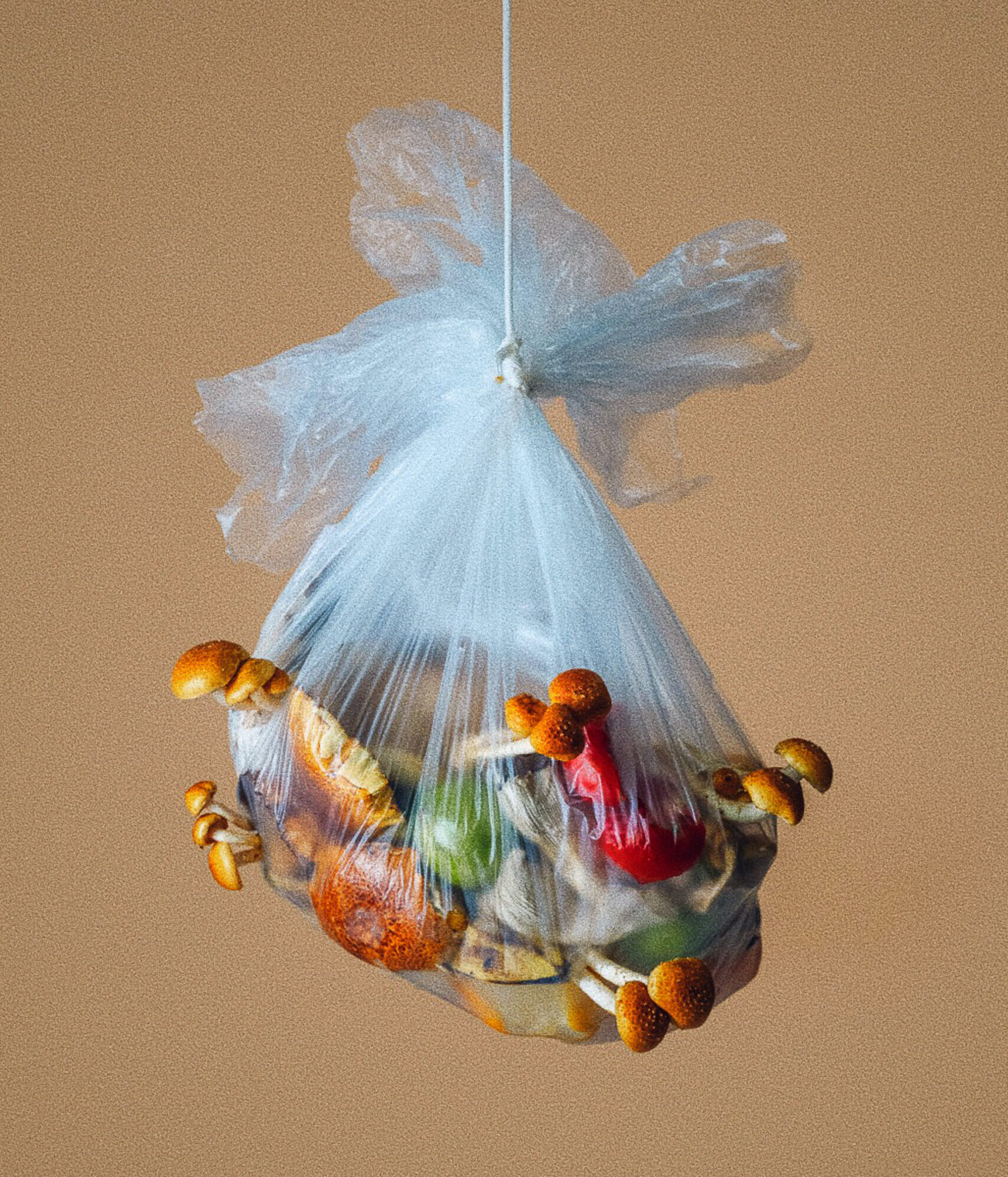
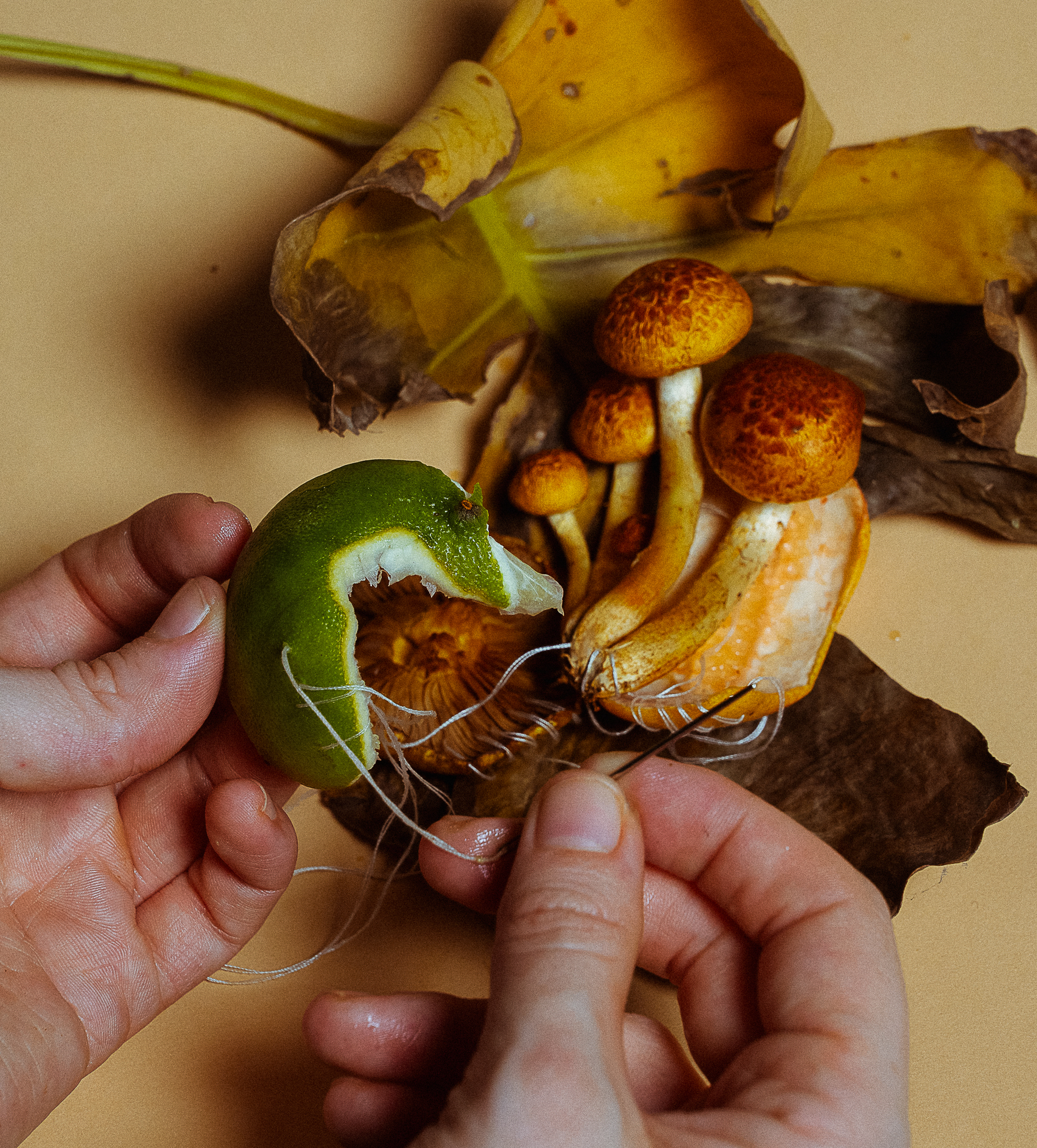
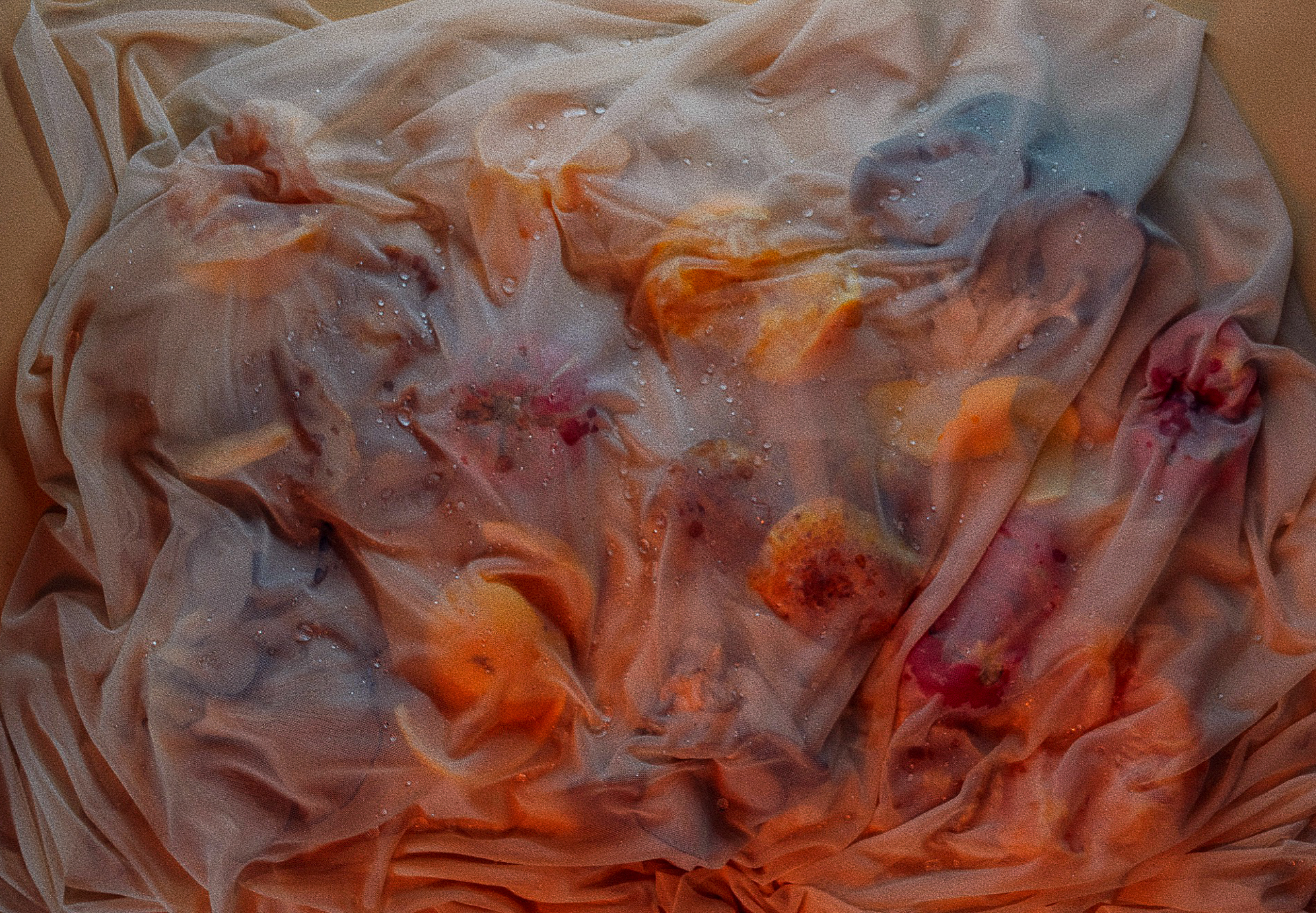
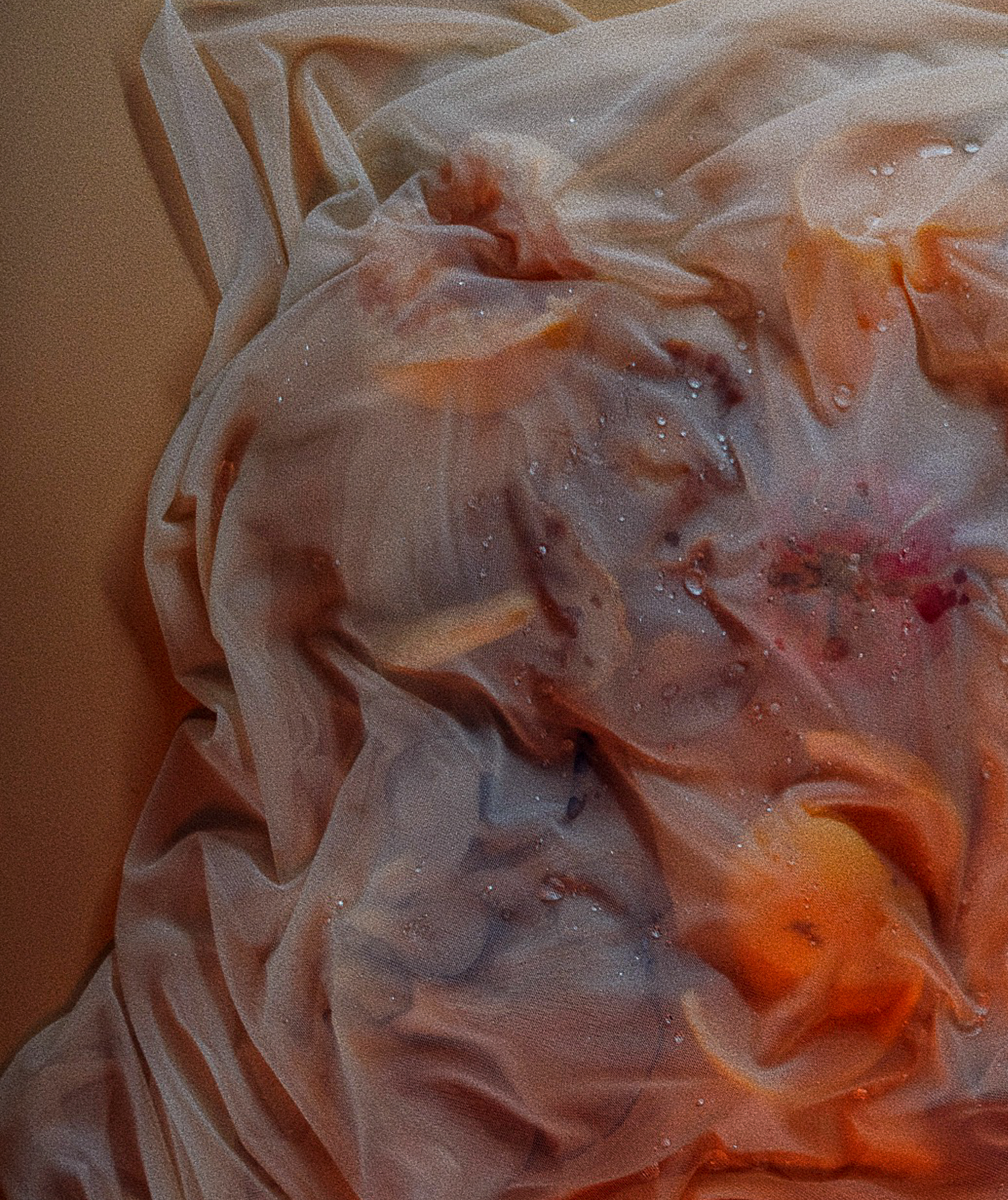
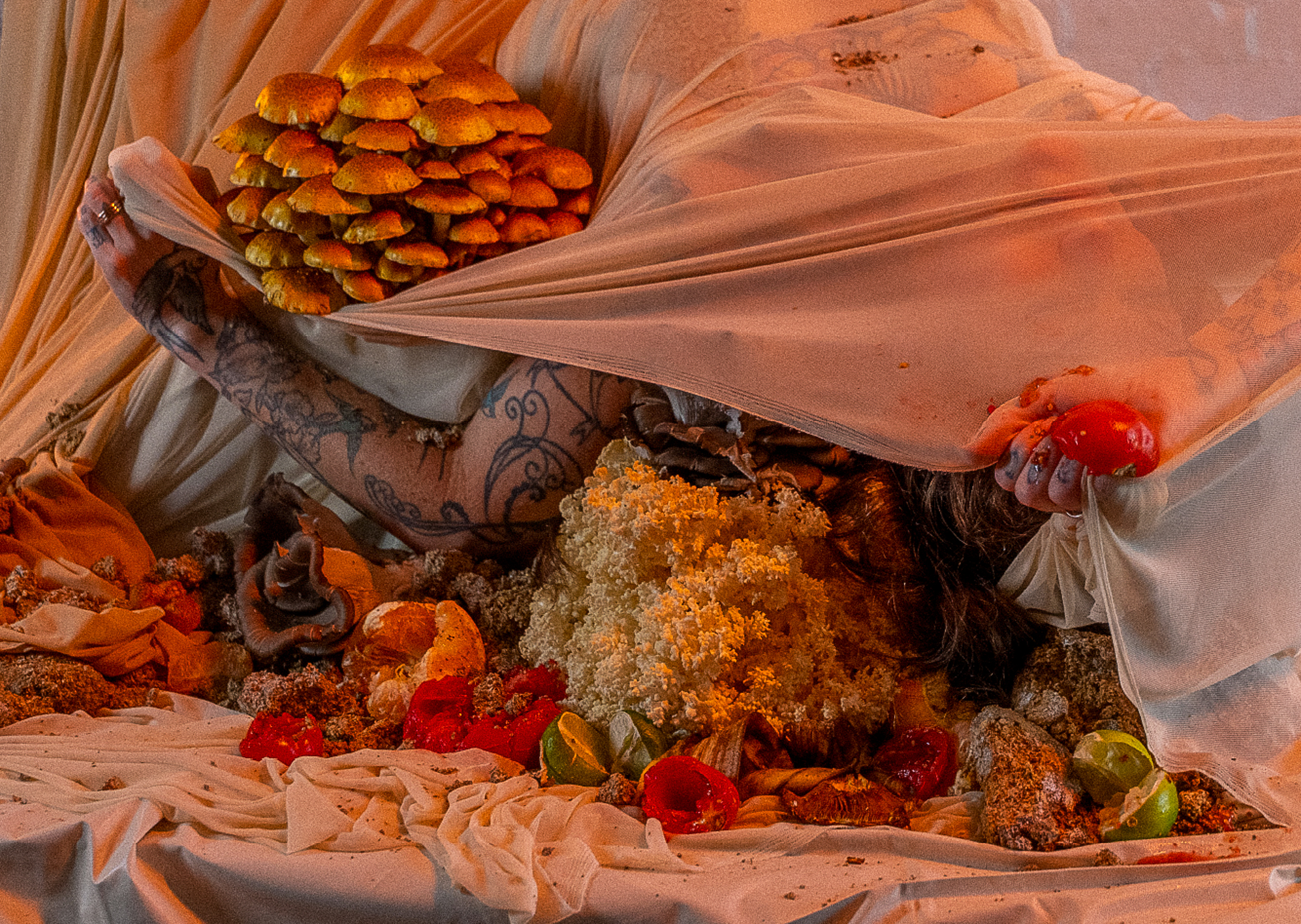
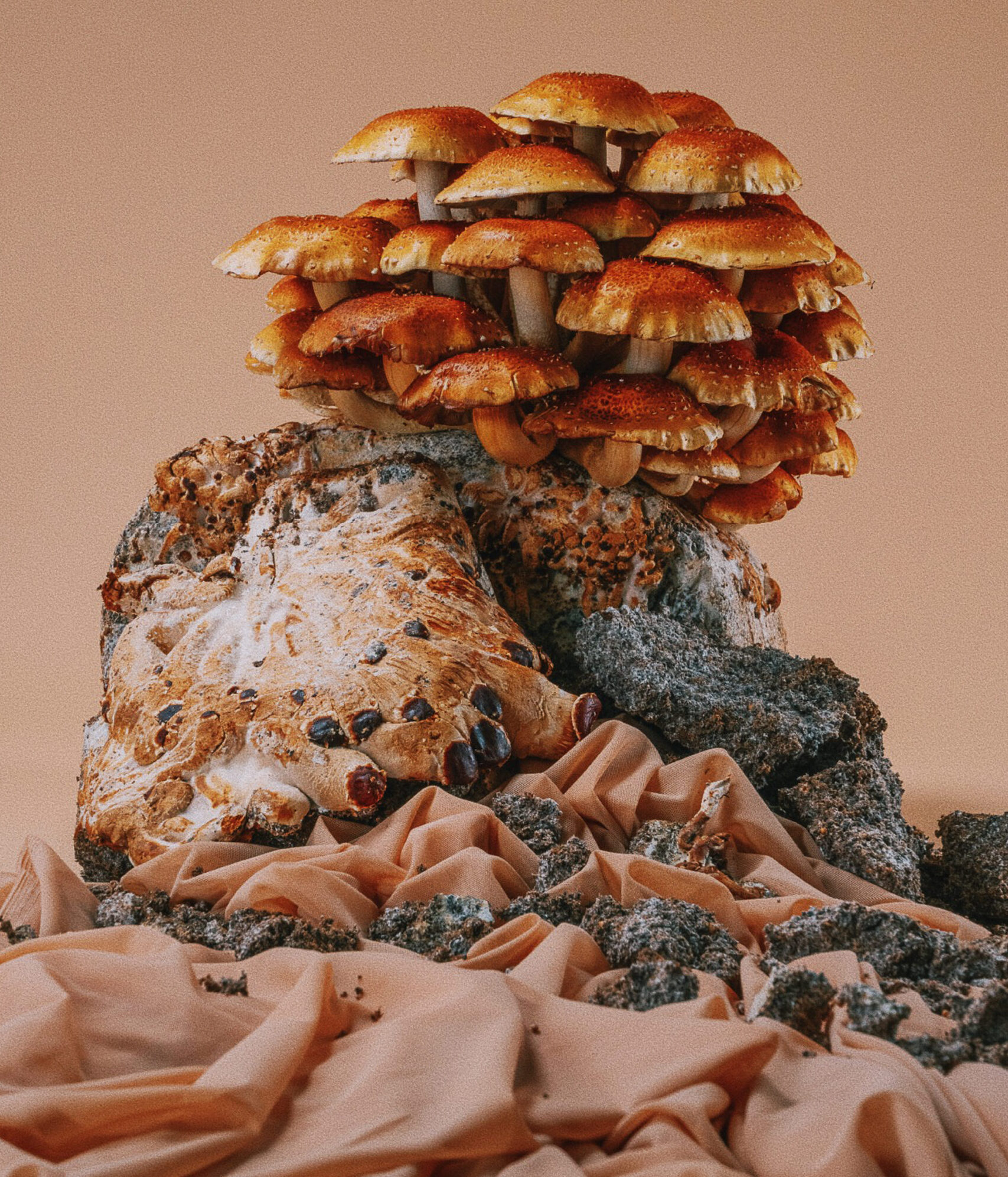
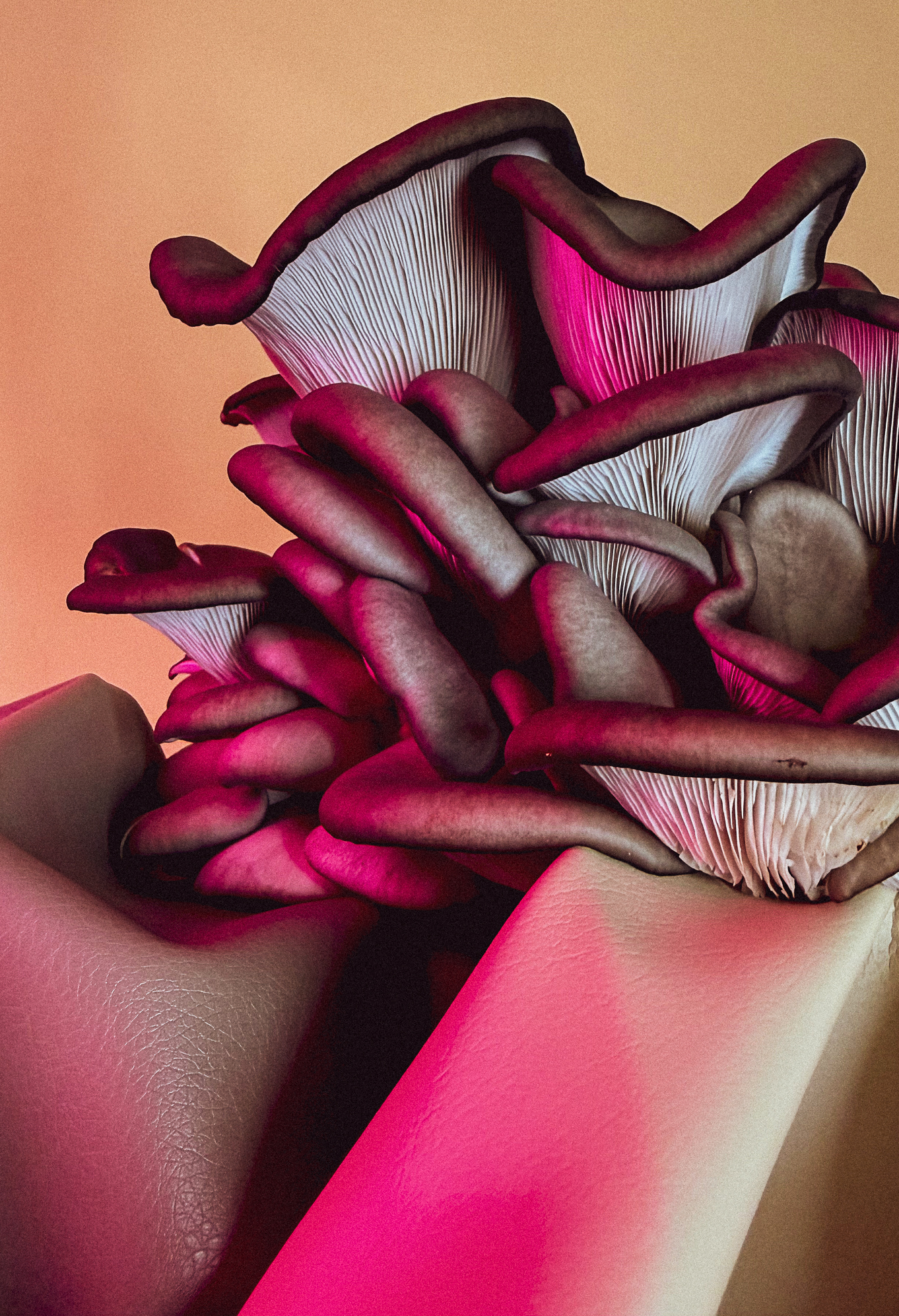
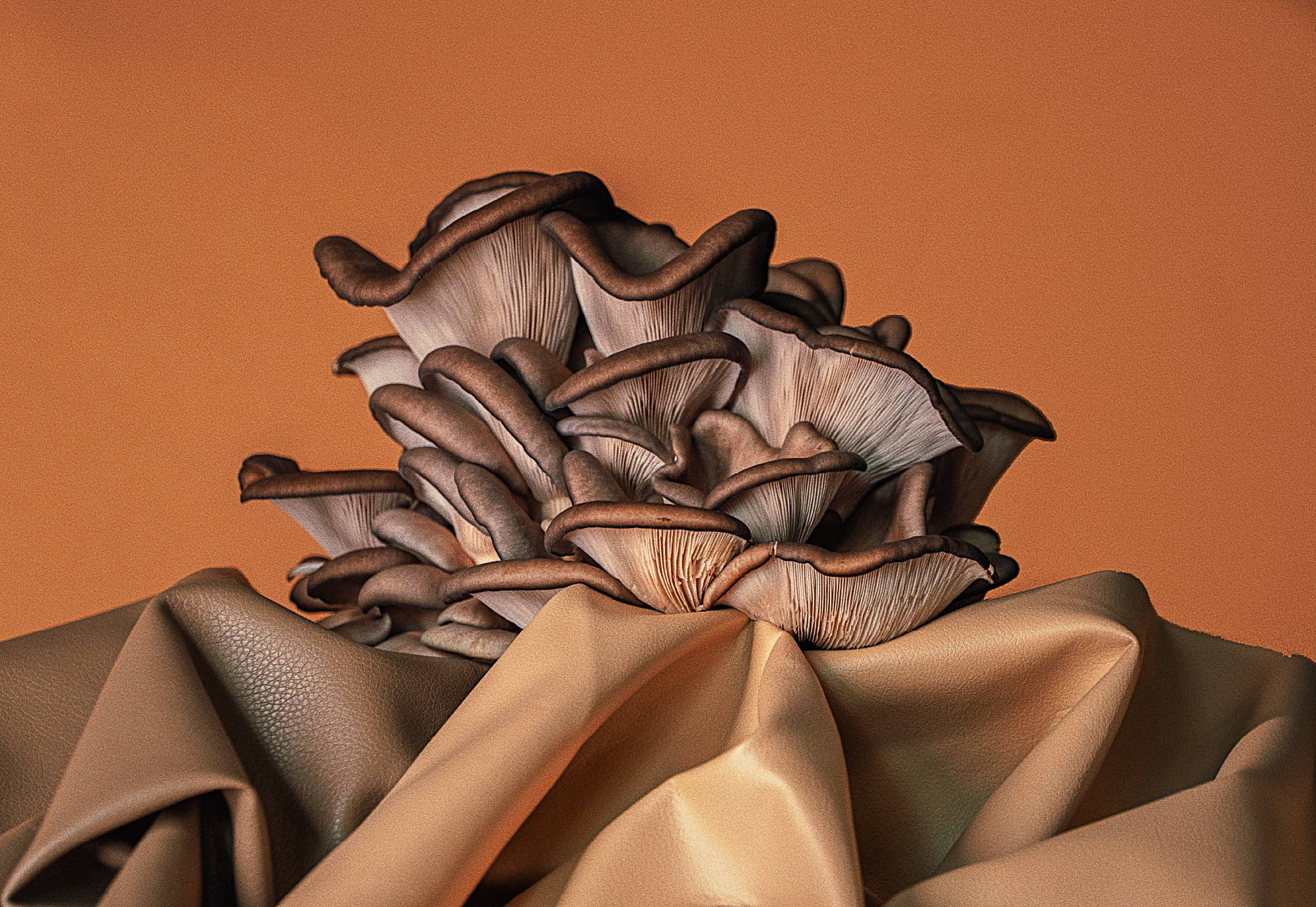
Form Follows & 1984 Studios explored this idea through a mesmerically, educational concept that represents the complex process of the product’s growth, a particularly surreal reality of its existence as a living entity, the photographic series explores our grotesque relationship with consumption. Aimed at connecting the common public with the unique chance to participate in desescalating the textile waste crises alongside helping mainstream culture set new standards, this series looks through the lens inspired by Polybion’s culturally-shifting belief that waste can consume to create. Materials do not have a waste problem, they have a design problem that ignores the step of waste in cyclical product development.
Polybion closes a gap in both textile development and agriculture infrastructure, alike. Moving the basis of agriculturally-derived ingredients to lab-grown bacteria fed by waste, fermented into cellulose sheets, and cultivating a circular economy for the textile and agricultural industries. In a realm that has widely ignored the latter systems of product lifecycles, Polybion has designed multi-faceted fabrics, more alive than inanimate, symbolically offering a solution that consumes, evolves and adapts — proving that our ability to close the loop of consumption can unilaterally redefine our relationship with waste.
Considering the inevitable by-product of agriculture as the foundational element of a material and at the initial stage of design demands a healthy ingredient forged from regenerative processes and introduces the necessity of multi-industry solutions to define closed-loop systems.
Our representation of Polybion’s material development is specifically surreal to engage audiences’ understanding of the complexities of the science and processes behind their lead lab-grown material: Celium. To illustrate the ethos and closed-loop systems thinking of Polybion while exploring the sociological impact of consumption, we designed a visual narrative that cultivates curiosity like their Fungi Lab does cellulose-sheets-turned-adaptable-material. Our translation of their processes – from extraction of waste to connecting ingredients to grow fabric – further untangles culture’s relationship through how what we consume consumes us.
We believe an integrated approach is vital to bridge the gap between science and the public’s perception and understanding of Polybion’s impact, cultivating a surreal storytelling experience to help the greater public visualize the processes behind closed-loop systems. By reducing synthetic inputs and providing a solution for agriculture waste to live a second through textile development, Polybion’s leading material Celium™ offers an alternative to traditional materials, such as animal-based leather, while simultaneously supporting a world that struggles with 11% of greenhouse gas emissions resulting from agricultural food waste.